Meet Brontë Grooms, RDN, FMNS — Functional Dietitian in Eugene, Oregon
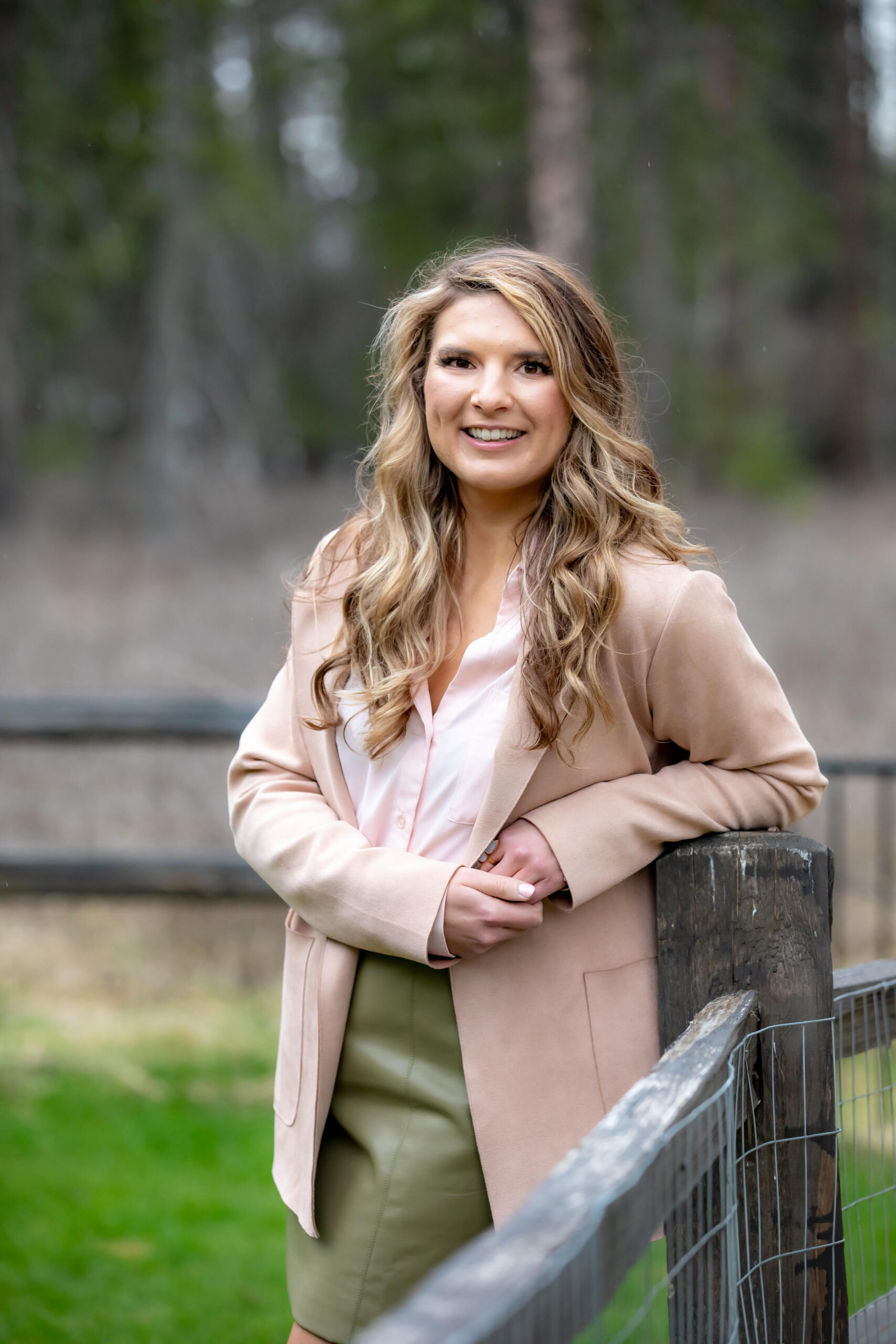
At Alive Integrative Medicine, we believe that the quality of your care starts with the person delivering it. So today, we’re introducing one of our own — Brontë Grooms, RDN, FMNS, our functional and integrative dietitian in Eugene, Oregon.
If you’ve ever felt dismissed, stuck, or frustrated after doing everything “right” and still not getting results — Brontë’s work is for you.
Who Is Brontë Grooms?
Brontë is a Registered Dietitian Nutritionist and Functional Medicine Nutrition Specialist with a practice built around one foundational question: why?
Not “what are your symptoms?” — but what is actually driving them. Her approach goes far beyond standard nutrition advice. She uses functional lab testing, genetic insights, and a deep understanding of how diet, environment, and biology interact to create a plan that is genuinely specific to each person she works with.
She sees patients in person at Alive Integrative Medicine in Eugene, Oregon, and offers telehealth nutrition counseling for patients across the United States.
Her Training and Background
Brontë completed her dietetic internship through Montana State University, where she focused on sustainable food systems and developed a deep understanding of the connection between food quality and long-term health. It was during that time that she was first introduced to functional medicine, epigenetics, and the emerging field of nutrigenomics — and something clicked.
She went on to train for five years under Amanda Archibald, a globally recognized nutrigenomics expert, and is certified as a Functional Medicine Nutrition Specialist through Next Level Functional Nutrition.
She is the only dietitian in the Eugene area with this level of advanced training in nutrigenomics and epigenetics. That distinction matters, because it means she can bring a precision to nutrition care that most practitioners simply don’t have access to.
Why She Does This Work
Brontë’s path into functional nutrition became personal.
She used a functional approach to address her own adult acne, and in doing so, uncovered underlying gut imbalances she hadn’t previously recognized. That experience changed how she understood health, and it shaped the practitioner she became.
“Finding and addressing root causes rather than just managing symptoms” isn’t a tagline for her. It’s the lens through which she approaches every patient she sees.
Her foraging background, influenced by her Chippewa heritage, adds another layer to her relationship with food as medicine. One that is grounded, intuitive, and deeply connected to the idea that nourishment is more than a macronutrient count.
Who She Works With
Brontë works primarily with women — often in their late 30s and beyond — who are dealing with concerns that haven’t responded to conventional approaches. Her patients frequently come to her after years of trying: different diets, different doctors, different protocols. And still not feeling well.
She commonly supports women navigating:
- Weight loss resistance — when the scale won’t move despite genuine effort
- Hormone imbalances — including PCOS, endometriosis, and perimenopause
- Thyroid conditions — particularly when standard treatment hasn’t resolved symptoms
- Digestive concerns — IBS, SIBO, bloating, and gut dysbiosis
- Fatigue and low energy that sleep doesn’t fix
- Complex or chronic health concerns that feel layered and hard to untangle
Her patients typically see steady weight loss of 2 to 4 pounds per month, alongside improvements in digestion, energy, and confidence in how they eat. But perhaps more importantly, they leave with an understanding of why their body was responding the way it was — and what to do about it long term.

Her Approach to Nutrition: Functional, Integrative, and Deeply Personal
This is where Brontë’s work gets genuinely interesting — and where it separates from anything you’ve likely encountered before.
What is functional nutrition?
Functional nutrition goes beyond telling you what to eat. It asks why your body is responding the way it is — and uses that understanding to create a plan that addresses the root of the problem, not just the surface presentation.
Standard nutrition advice operates on generalizations: eat more vegetables, reduce processed food, watch your portions. That advice isn’t wrong. But it doesn’t explain why two people can follow the identical plan and have completely different outcomes. Functional nutrition does.
What is nutrigenomics — and why does it matter?
Nutrigenomics is the science of how your genes interact with food, lifestyle, and environment. It’s one of the most exciting and clinically meaningful areas in modern nutrition — and one that most practitioners have little to no training in.
Here’s what it means in practice: your genetic variations affect how you absorb nutrients, how you metabolize fats and carbohydrates, how your hormones are processed, how well you handle certain foods, and even how your body responds to stress. Two people can eat the same meal and have entirely different physiological responses — because of their genes.
Brontë uses genetic insights alongside functional lab testing to understand exactly what your body needs — not a generalized recommendation, but a plan built around your individual biology.
What is epigenetics — and how does it change what’s possible?
Epigenetics is the study of how your behaviors and environment affect how your genes are expressed. Your DNA is not destiny. The way you eat, sleep, move, manage stress, and interact with your environment can literally turn genes on or off — influencing everything from inflammation to hormone production to metabolic function.
This is genuinely hopeful information. It means that even if you have a genetic predisposition toward something — weight gain, insulin resistance, thyroid dysfunction — those outcomes are not fixed. They are, to a significant extent, modifiable. And nutrition is one of the most powerful tools available for doing that.
Brontë’s training in both nutrigenomics and epigenetics means she approaches nutrition not as a static prescription, but as a living, responsive strategy — one that evolves with you.
Functional lab testing: seeing what standard tests miss
Alongside genetic insights, Brontë uses functional lab testing to get a precise picture of what’s happening beneath the surface. This might include markers for gut health, nutrient status, inflammation, blood sugar and insulin dynamics, hormone levels, and more.
The goal is always the same: understand the individual in front of her — not apply a protocol to a category of symptoms.
Real life, sustainable change
Brontë doesn’t believe in rigid diets or one-size-fits-all plans. She understands that lasting change has to fit your actual life — your schedule, your preferences, your relationship with food, and where you’re starting from.
Her approach integrates whole-food nutrition, lifestyle medicine, targeted supplementation when indicated, and the kind of ongoing support that helps patients actually implement change — not just understand it in theory.
What a Nutrition Appointment Looks Like
Initial consultation
Your first appointment is an in-depth conversation. Brontë explores your full health history, dietary patterns, lifestyle factors, stress load, sleep, emotional wellbeing, and health goals. She takes time to understand the context of your symptoms — not just the symptoms themselves.
Personalized nutrition plan
Based on that assessment — and informed by any functional labs or genetic data — she builds a nutrition plan that is specific to you. It may include whole-food recommendations, lifestyle modifications, supplement guidance, and targeted strategies for whatever is driving your particular concerns.
Ongoing support
Follow-up sessions focus on monitoring progress, troubleshooting challenges, and adjusting the plan as your body responds. Sustainable change takes time — and Brontë stays with you through that process, providing education and accountability along the way.
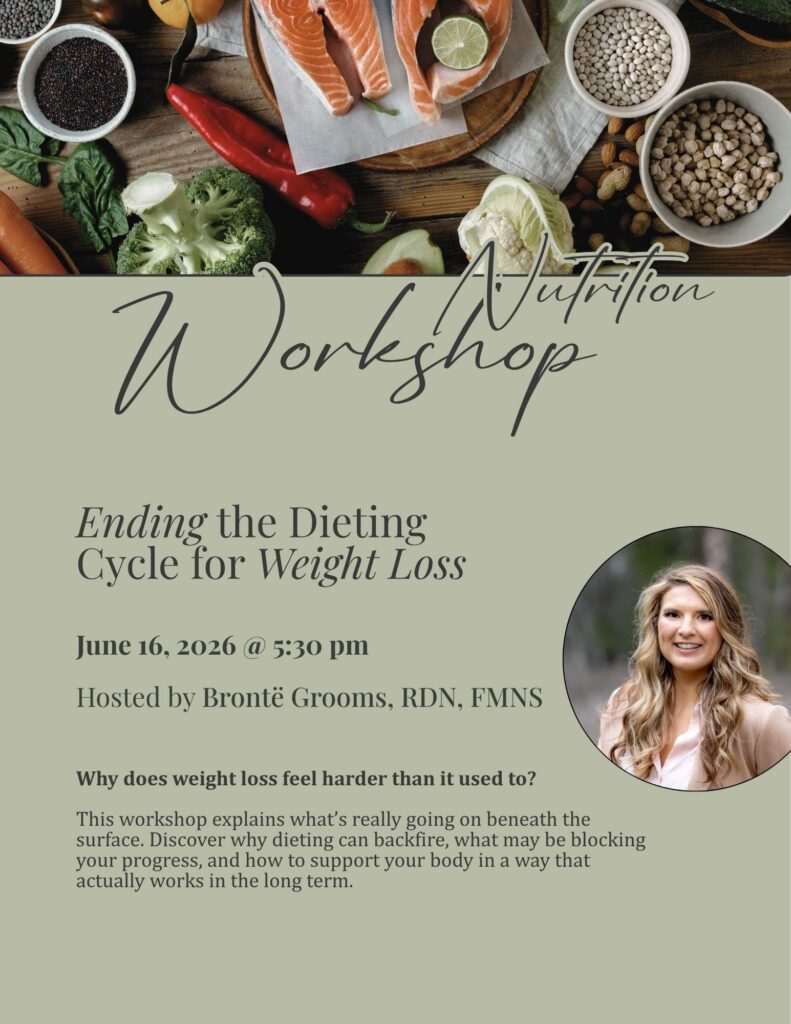
Join Brontë for Her Upcoming Workshop
If you’ve been curious about Brontë’s approach — or if you’ve been stuck in a cycle of dieting that isn’t working — this is the perfect opportunity to learn directly from her.
Nutrition Workshop: Ending the Dieting Cycle for Weight Loss
📅 June 16, 2026 @ 5:30pm
📍 Hosted by Brontë Grooms, RDN, FMNS
Why does weight loss feel harder than it used to? In this workshop, Brontë explains what’s really going on beneath the surface — why dieting can backfire, what may be blocking your progress, and how to support your body in a way that actually works long term.
Sign up at: aliveintegrative.myflodesk.com/nutritionworkshop
Ready to Work With Brontë?
If you’re ready for nutrition care that actually looks at you — your biology, your history, your life — we’d love to connect you with Brontë.
She is accepting new patients in Eugene, Oregon and via telehealth across the United States.
📞 Call to schedule: (541) 636-3079
🌐 Book online: aliveintegrative.com/nutrition-therapy-eugene